
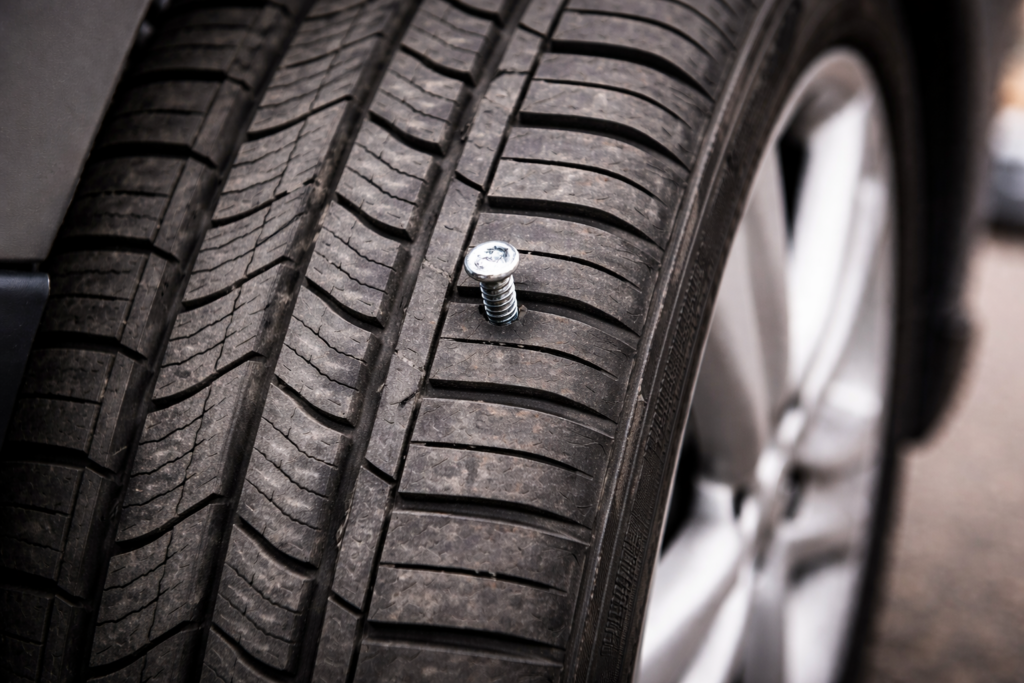
Discovering a nail or screw in your tire is not only frustrating, but also cause for concern. Many drivers wonder if they can keep driving or if they need to stop immediately. The answer depends on a few factors, but in most cases, you should take the situation seriously and have the tire checked as soon as possible.
A small puncture may seem minor, but it can lead to air loss, reduced traction, and eventually a flat tire if ignored.
Is It Safe to Keep Driving With a Nail in Your Tire?
Sometimes a nail stuck in the tread doesn’t cause immediate air loss. The object may actually be temporarily sealing the hole, which is why the tire still looks inflated.
However, the situation can change quickly.
Driving on a punctured tire can cause:
- Slow air leaks that worsen over time
- Sudden loss of tire pressure
- Damage to the tire’s internal structure
- Reduced control while driving
Even if the tire appears fine at first, it’s best to avoid long trips or highway driving until the tire is inspected.
Should You Remove the Nail?
One common mistake is pulling the nail out right away.
If the object is still embedded, leave it in place. Removing it may allow the air to escape quickly and leave you with a flat tire where you’re parked.
Instead, it’s safer to leave the nail in the tire and have a professional evaluate the damage.
What You Should Do Right Away
If you notice a nail in your tire, a few simple steps can help prevent bigger problems.
- Check the tire pressure. If it’s low, add air if possible.
- Drive cautiously. Avoid high speeds and sharp turns.
- Listen and feel for changes. Vibrations or pulling may indicate worsening damage.
- Have the tire inspected soon. A professional can determine whether the tire can be safely repaired.
In many cases, punctures in the tread area can be repaired if the hole is small and the tire hasn’t been driven on while flat.
When a Tire Cannot Be Repaired
Not every puncture can be fixed. A tire may need to be replaced if:
- The puncture is in the sidewall or shoulder of the tire
- The hole is larger than about ¼ inch
- The tire was driven on while severely underinflated
- There are multiple punctures close together
A proper inspection will determine the safest option.
Don’t Ignore a Tire Puncture
A nail in your tire might seem like a small inconvenience, but ignoring it can lead to bigger problems. Prompt inspection and repair can often save the tire and prevent a roadside breakdown.
When it comes to tire safety, it’s always better to address a small issue early rather than risk a sudden flat later.
