Your tires are the only part of your vehicle that touches the road, yet they’re often one of the most overlooked safety items. Many drivers assume tires only need replacing when they look worn out, but mileage, age, and subtle warning signs all play an important role in knowing when it’s time for new tires.
Understanding when to replace your tires can help keep you safe, improve handling, and prevent unexpected problems on the road.
How Many Miles Do Tires Usually Last?
Most passenger vehicle tires are designed to last between 40,000 and 70,000 miles, depending on the tire type, driving habits, and road conditions.
However, mileage alone doesn’t tell the whole story. Tires driven mostly on highways at steady speeds may last longer than tires exposed to frequent stop-and-go driving, rough roads, or aggressive acceleration and braking.
If you’re not sure how many miles your tires have on them, a tire professional can help evaluate their condition rather than relying on mileage estimates alone.
Tire Age Matters More Than Many Drivers Realize
Even if your tires still have good tread, age can make them unsafe. Over time, the rubber compounds in tires dry out and lose flexibility, increasing the risk of cracking or sudden failure.
As a general guideline:
- Tires 5–6 years old should be inspected regularly
- Tires 6–10 years old may need replacement, even if they appear fine
You can find your tire’s age by checking the DOT code on the sidewall, which shows the week and year the tire was manufactured.
Warning Signs Your Tires May Need Replacing
Some tire problems aren’t obvious at first glance. Watch for these common warning signs:
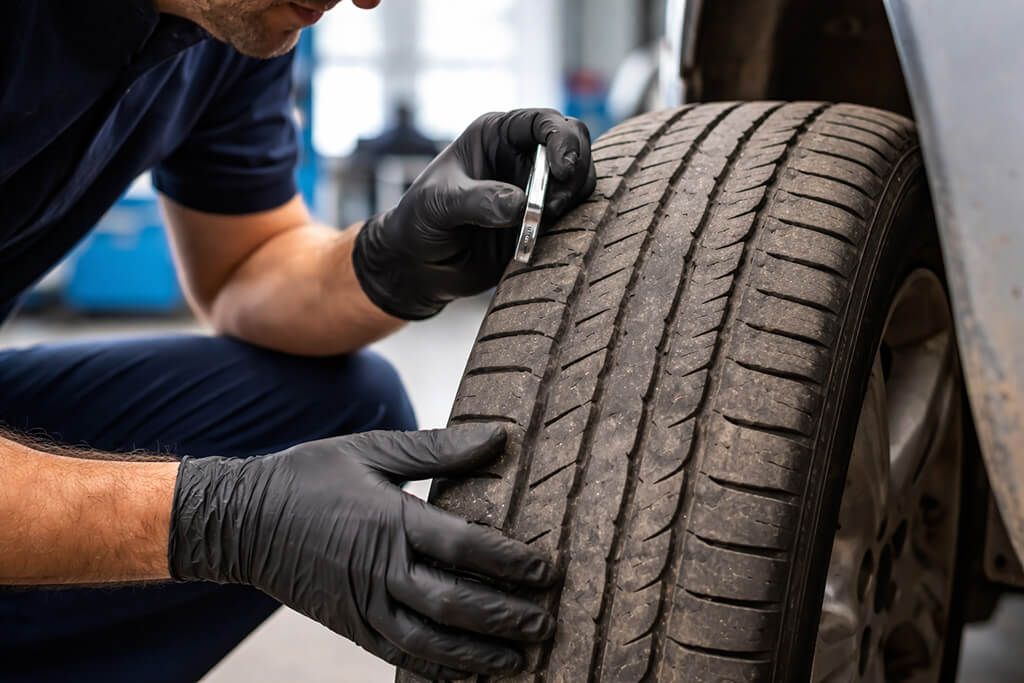
- Low tread depth, especially if the tread is worn smooth
- Cracks or dry rot on the sidewalls
- Bulges or blisters, which can signal internal damage
- Uneven wear patterns, often caused by alignment or suspension issues
- Frequent air pressure loss
- Increased road noise or vibration
If you notice any of these issues, it’s best to have your tires checked sooner rather than later.
Why Driving on Worn Tires Is Risky
Worn or aging tires reduce traction, especially in wet or slippery conditions. This can lead to:
- Longer stopping distances
- Reduced steering control
- Increased risk of hydroplaning
- Higher chances of a blowout
Replacing tires at the right time helps ensure your vehicle responds properly when you need it most.
When in Doubt, Get a Professional Opinion
If you’re unsure whether your tires still have life left in them, a professional tire inspection can provide peace of mind. A trained technician can evaluate tread depth, age, wear patterns, and overall safety, helping you make an informed decision without guesswork.
There’s no single rule for when every tire should be replaced. Mileage, age, driving conditions, and visible wear all matter. Paying attention to these factors can help you avoid surprises and keep your vehicle safe and dependable year-round.
