 Most drivers know they should rotate their tires, but many aren’t exactly sure why it matters or how often it should be done. Tire rotation is one of the simplest and most affordable ways to extend the life of your tires, improve vehicle safety, and keep your car performing the way it should.
Because each tire on your vehicle experiences wear differently, rotating them at regular intervals helps distribute that wear more evenly. The result is longer-lasting tires, better traction, and a smoother ride.
Let’s take a closer look at why tire rotation matters and when you should schedule it.
Why Tires Wear Unevenly
Even if you drive carefully, your tires rarely wear at the same rate. Several factors cause different tires to wear faster than others:
- Weight distribution: The front of most vehicles carries more weight because of the engine.
- Steering forces: Front tires do the majority of turning.
- Braking pressure: Front tires handle more braking force.
- Drivetrain type: Front-wheel, rear-wheel, and all-wheel drive vehicles all wear tires differently.
Because of these factors, the front tires often wear faster than the rear tires, especially on front-wheel-drive vehicles. Without rotation, some tires may wear out long before others.
What Tire Rotation Actually Does
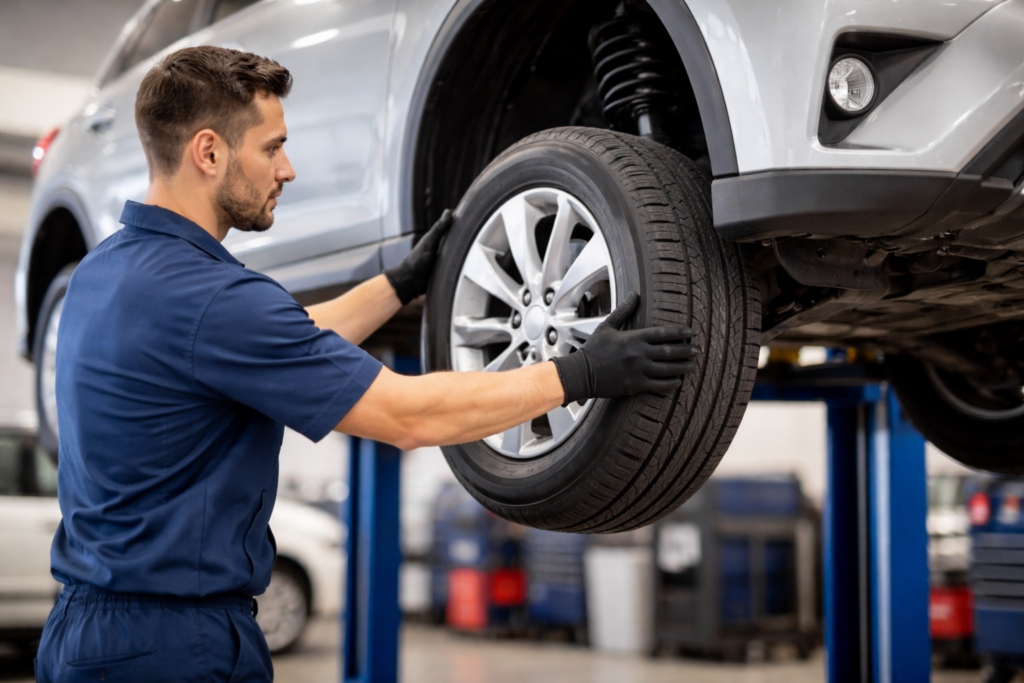
Tire rotation simply means moving each tire to a different position on the vehicle. This allows each tire to experience different forces over time.
Common rotation patterns include:
- Front-to-rear rotation (common on front-wheel-drive vehicles)
- Rearward cross rotation (often used for rear-wheel-drive vehicles)
- X-pattern rotation
- Side-to-side rotation for certain directional tires
A technician will choose the correct pattern based on your vehicle type and tire design.
Over time, rotation helps ensure all four tires wear at a similar rate, which improves performance and helps you get the full value from your tire investment.
How Tire Rotation Extends Tire Life
Regular rotation provides several benefits that help your tires last longer.
More Even Tread Wear
Uneven tread wear can shorten the lifespan of your tires. Rotation spreads the wear across all four tires instead of concentrating it on just two.
Better Traction and Handling
When tires wear evenly, they maintain better contact with the road, which improves grip, especially in rain or light snow.
Smoother Ride
Uneven tires can cause vibrations or noise while driving. Rotating tires helps maintain consistent performance.
Protects Your Tire Warranty
Many tire manufacturers require regular rotation (often every 5,000–8,000 miles) to maintain warranty coverage.
When Should You Rotate Your Tires?
Most experts recommend rotating tires every 5,000 to 7,500 miles. For many drivers, this works out to about every other oil change.
However, the ideal interval can vary depending on:
- Vehicle type
- Driving habits
- Tire type
- Manufacturer recommendations
A good rule of thumb is to check your owner’s manual or ask a tire professional about the best schedule for your vehicle.
If you notice uneven wear, it may be time to rotate sooner.
Signs Your Tires May Need Rotation
Sometimes your car will give subtle clues that the tires are wearing unevenly.
Watch for signs like:
- One tire wearing down faster than the others
- Steering wheel vibration at highway speeds
- Increased road noise
- Uneven tread patterns across your tires
If you notice any of these issues, a tire inspection and rotation can help correct the problem before it shortens tire life.
Tire Rotation Is a Simple Way to Save Money
Replacing tires is one of the larger maintenance expenses for vehicle owners. The good news is that a simple maintenance step can help delay that cost.
By rotating your tires regularly, you can:
- Extend the lifespan of your tires
- Maintain better traction and safety
- Improve overall driving comfort
- Get the most value from your tire purchase
It’s a small service that can make a big difference in how long your tires last.
