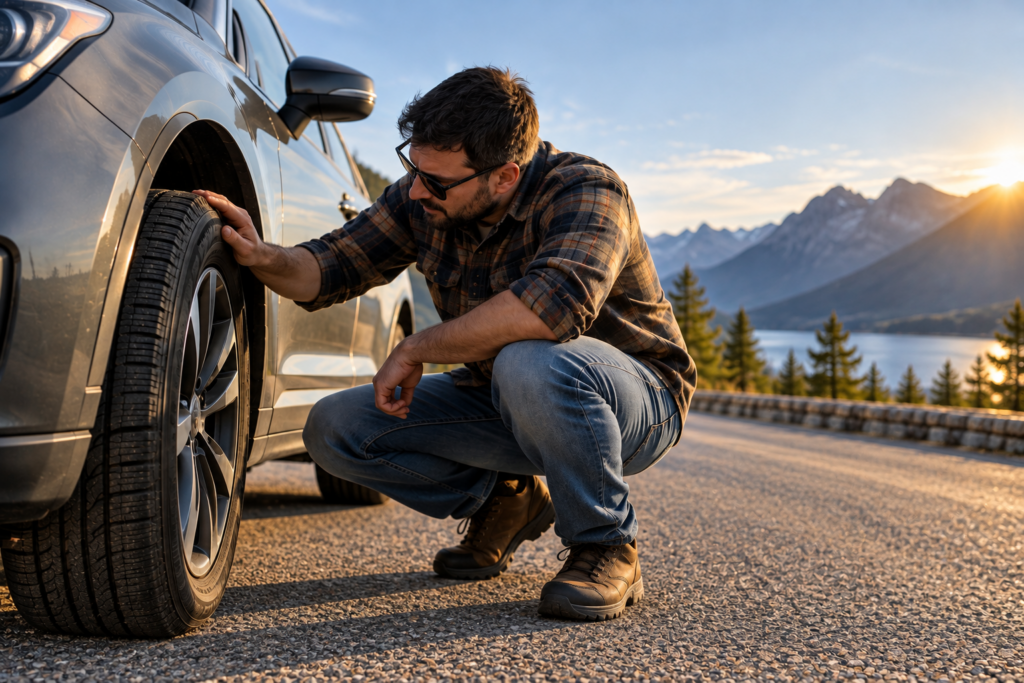
A long road trip should be about enjoying the journey, not dealing with a flat tire on the side of the highway. Whether you’re heading out on a family vacation, visiting relatives, or taking a weekend getaway, your tires play a major role in keeping your trip safe and trouble-free.
The good news is that many common tire problems can be prevented with a few simple checks before you leave. Taking 15 to 20 minutes to inspect your tires, or scheduling a professional tire inspection, can help you avoid unexpected delays and costly roadside repairs.
Key Takeaways
- Check tire pressure when your tires are cold and adjust it to your vehicle manufacturer’s recommendations.
- Inspect tire tread depth and look for uneven wear before a long drive.
- Check for cracks, bulges, nails, or other visible tire damage.
- Make sure your spare tire or emergency tire repair kit is ready to use.
- Consider your vehicle’s passenger and luggage weight when preparing for a trip.
- Have a tire professional inspect any concerns before heading out on the highway.
Check Your Tire Pressure Before You Leave
Proper tire inflation is one of the most important things you can do before a road trip. Underinflated tires generate extra heat, especially during extended highway driving. This can increase tire wear, reduce fuel efficiency, and raise the risk of tire failure. Overinflated tires can also affect handling and cause uneven wear.
To check tire pressure:
- Use a reliable tire pressure gauge.
- Check pressure when the tires are cold, ideally before driving or after the vehicle has been parked for at least three hours.
- Find the recommended pressure on the sticker inside the driver’s door or in your owner’s manual.
- Add or release air as needed.
Keep in mind, the pressure printed on the tire’s sidewall is the tire’s maximum rated inflation pressure, not necessarily the recommended pressure for your vehicle.
Also, remember that tire pressure changes with temperature. If you’re traveling between climates, it’s a good idea to check it again during your trip.
Inspect Your Tire Tread Depth
Your tire tread helps maintain traction, especially when driving on wet roads. Worn tires are more likely to lose traction in heavy rain and can increase stopping distances.
One simple way to check tread depth is the penny test:
- Place a penny into a tread groove with Lincoln’s head pointing down.
- If you can see the top of Lincoln’s head, the tread is approximately 2/32 of an inch or less.
- At this depth, the tire has reached the minimum legal tread depth in many states and should be replaced.
For wet-weather road trips, it’s worth considering replacement before reaching that minimum. Tires with 4/32 of an inch of tread or less may have significantly reduced wet-road performance. Check several locations across each tire, since tread may wear unevenly.
Look for Tire Damage and Uneven Wear
Even if your tires have plenty of tread, visible damage can be a warning sign. Before leaving, walk around your vehicle and look for:
- Cracks or cuts in the rubber
- Bulges or bubbles along the sidewall
- Nails, screws, or other objects embedded in the tread
- Unusual wear along the inside or outside edges
- Areas that appear more worn than the rest of the tire
A bulge in the sidewall may indicate internal tire damage and requires immediate attention. Do not drive on a tire with a suspected sidewall bulge. Uneven wear may point to problems with wheel alignment, tire inflation, or suspension components. A tire professional can help identify the cause before it becomes a larger issue.
Make Sure Your Spare Tire Is Ready
A spare tire is only helpful if it’s in good condition and properly inflated. If your vehicle has a spare, check:
- Tire pressure
- Visible cracks or other damage
- Overall tire condition and age
- Availability of the jack, lug wrench, and any necessary wheel-lock key
Some vehicles have compact temporary spare tires, which come with speed and distance limitations. Check your owner’s manual for those restrictions.
Other vehicles come with a tire repair and inflation kit instead of a spare. Make sure the kit is complete, its sealant has not expired, and you understand how to use it.
A roadside assistance membership can also provide peace of mind, especially when traveling through unfamiliar areas.
Consider How Much Weight You’re Carrying
Road trips often mean extra passengers, luggage, coolers, and other gear. All that additional weight affects your tires. Every vehicle has a maximum load capacity, which can be found on the tire and loading information label, typically inside the driver’s door.
Overloading your vehicle can cause:
- Increased heat buildup in tires
- Longer braking distances
- Reduced handling performance
- Additional stress on tires and suspension components
Distribute luggage evenly and avoid exceeding your vehicle’s recommended weight limits. If your vehicle manufacturer specifies different tire pressures for heavier loads, follow those instructions.
Pay Attention to Tire Age
Tires can deteriorate over time, even if they have plenty of tread remaining. Exposure to sunlight, heat, weather, and normal use can gradually affect rubber compounds.
You can determine a tire’s manufacturing date by checking the last four digits of its DOT Tire Identification Number. For example, “2522” means the tire was manufactured during the 25th week of 2022.
Many vehicle manufacturers recommend replacing tires after six years, regardless of tread wear, while tire manufacturers may have different recommendations. Follow the guidance for your vehicle and tires. If your tires are several years old, a professional inspection before a long road trip is a sensible precaution.
Don’t Ignore Vibrations or Unusual Tire Noises
Your vehicle may already be giving you clues that something isn’t right.
Warning signs include:
- Steering wheel vibration at highway speeds
- A vehicle that consistently pulls to one side
- Humming or thumping noises that increase with speed
- A tire pressure warning light that keeps returning
- A noticeable change in how your vehicle handles
These symptoms can be related to tire balance, alignment, tire damage, or other mechanical issues.
It’s best to have them evaluated before leaving rather than hoping they’ll disappear during the trip.
What to Do If You Notice Tire Problems During Your Trip
Even with careful preparation, tire problems can happen.
If you notice unusual vibration, handling changes, or a tire pressure warning, reduce speed and find a safe place to stop.
If a tire suddenly fails, maintain a firm grip on the steering wheel, avoid sudden braking, and gradually slow down before pulling over safely.
Never attempt to change a tire in an unsafe location, such as a narrow highway shoulder with heavy traffic. Contact roadside assistance when necessary.
A Quick Tire Inspection Can Make Your Road Trip Safer
Your tires are the only parts of your vehicle that directly contact the road. Making sure they’re ready for a long drive is an important part of preparing for any trip. A few simple checks can help you catch potential problems early, protect your passengers, and reduce the likelihood of unexpected roadside delays.
If you’re unsure about your tire pressure, tread depth, or overall tire condition, schedule an inspection with a qualified tire professional before your next road trip.
