Keeping your car safe and dependable doesn’t have to be complicated. One of the simplest ways to prevent unexpected repairs is by regularly checking your vehicle’s essential fluids. Even if you’re not very familiar with car maintenance, learning the basics can help you catch small issues before they grow into expensive problems.
Why Checking Fluids Matters
Your car relies on several different fluids to run smoothly. These fluids help cool, clean, lubricate, and protect important systems. When levels run low or fluid becomes old or dirty, parts can wear out faster, overheat, or fail completely. A quick check in your driveway can go a long way toward keeping your vehicle reliable.
Engine Oil: Your Engine’s Lifeline
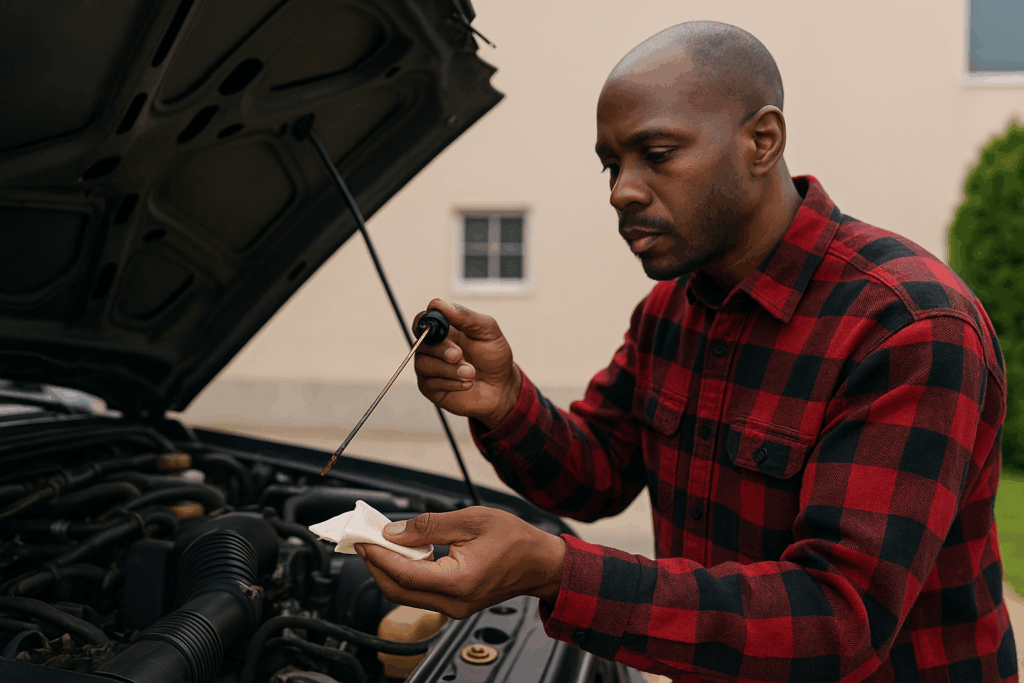
Engine oil keeps everything inside your engine moving smoothly. To check it:
- Park on a level surface and let the engine cool.
- Open the hood and find the dipstick.
- Pull it out, wipe it clean, then dip it back in.
- Pull it out again and look at the oil level and color.
If the oil looks very dark, gritty, or is below the recommended level, it may be time for an oil change.
Coolant: Preventing Overheating
Coolant (or antifreeze) keeps your engine from getting too hot or too cold. To check it:
- Make sure the engine is completely cool.
- Locate the coolant reservoir under the hood.
- Check that the fluid is between the “MIN” and “MAX” lines.
If you notice frequent low levels, have your cooling system checked—there could be a leak.
Brake Fluid: Essential for Safe Stopping
Brake fluid helps transfer pressure from your foot to the brakes. Low or dirty brake fluid can affect your ability to stop quickly. To check it:
- Find the brake fluid reservoir, usually near the back of the engine bay.
- Look for clear markings on the container that show the proper level.
- The fluid should be a clear, light yellow—not dark or dirty.
If it looks low or contaminated, have your brakes inspected right away.
Transmission Fluid: Smooth Shifting
Not all cars allow you to check transmission fluid easily, but many do. If your car has a transmission dipstick:
- Let the engine warm up.
- Check the level the same way you check engine oil.
- Transmission fluid should be bright red or pink and should not smell burnt.
If your vehicle has a sealed transmission, a professional will need to check it for you.
A Few Extra Tips for Beginner Drivers
- Check fluids every month, or before long trips.
- Always use the type of fluid recommended in your owner’s manual.
- If you ever notice leaks under your car, don’t ignore them! Fluids shouldn’t be leaving your vehicle.
When in Doubt, Ask a Professional
Learning to check your car’s fluids is a great step toward keeping your vehicle safe and dependable. But if you’re not confident doing these checks yourself, or if something doesn’t seem right, don’t hesitate to schedule an appointment with a certified auto technician. Regular maintenance now can save you from major repairs later and help your car stay on the road longer.
