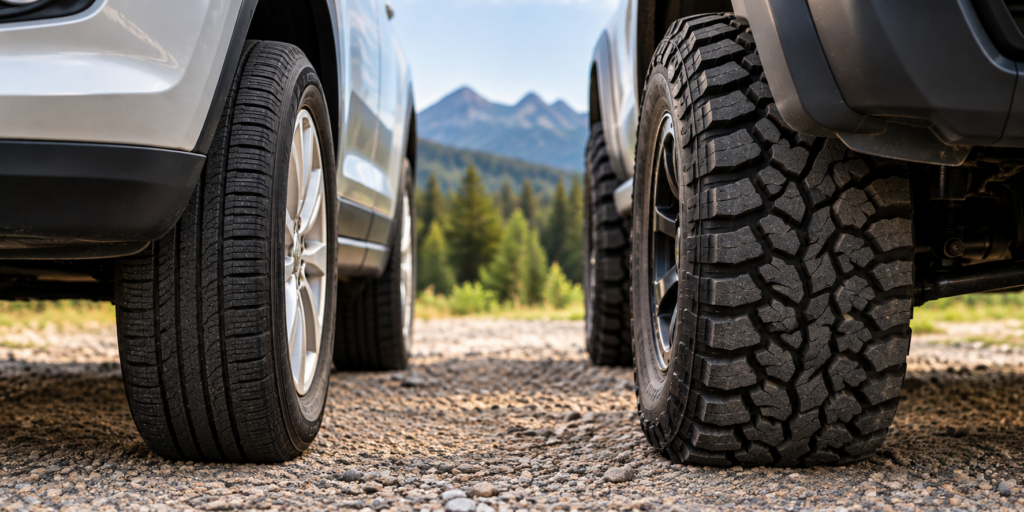
Bigger tires can give a vehicle a more rugged appearance, improve ground clearance, and offer certain performance advantages. But changing your tire size isn’t always an upgrade.
Your vehicle’s original tire size was selected to work with its suspension, braking system, steering, and other components. Installing larger tires can affect everything from fuel economy to ride comfort and speedometer accuracy.
Before making the switch, it’s important to understand the advantages, disadvantages, and potential costs of changing tire size.
Key Takeaways
- Bigger tires can improve ground clearance and off-road capability when properly matched to the vehicle.
- Larger tires may reduce fuel efficiency, change handling, and increase road noise.
- Changing tire diameter can affect speedometer accuracy and vehicle safety systems.
- Not every larger tire will fit without modifications to the wheels, suspension, or body.
- Tire width, sidewall height, and overall diameter all influence how your vehicle performs.
- Consult a qualified tire professional before changing from your vehicle manufacturer’s recommended tire size.
What Does It Mean to Increase Your Tire Size?
When people talk about getting bigger tires, they may mean several different things.
- Wider tires: Tires with a larger contact width, which can change traction and handling.
- Taller tires: Tires with a larger overall diameter, potentially increasing ground clearance.
- Larger wheels: Wheels with a greater rim diameter, which don’t necessarily make the overall tire diameter larger.
For example, switching from a 17-inch wheel to an 18-inch wheel doesn’t automatically mean you’re getting a taller tire. A tire with a shorter sidewall may keep the overall diameter nearly the same.
This distinction matters because each type of change can affect your vehicle differently.
The Pros of Bigger Tires
1. Improved Ground Clearance
One of the biggest advantages of taller tires is increased ground clearance. This can be helpful for drivers who regularly travel on rough roads, gravel, or uneven terrain.
However, the increase in ground clearance is only about half the increase in tire diameter. For example, moving from a 30-inch tire to a 32-inch tire raises the axle approximately one inch, assuming the tires’ actual dimensions match their nominal sizes.
2. Better Performance in Certain Off-Road Conditions
Larger tires can be beneficial for off-road driving, particularly when combined with an appropriate tread design.
Depending on the terrain, larger tires may help with:
- Navigating rocks and ruts
- Traveling over uneven surfaces
- Maintaining traction on loose terrain
- Reducing the likelihood of underbody contact
Tire size alone doesn’t determine off-road performance. Tread pattern, tire construction, inflation pressure, and driving conditions are equally important.
3. A Different Appearance
For many vehicle owners, appearance is a major reason for choosing larger tires. Bigger tires can create a more aggressive stance, particularly on trucks and SUVs.
While appearance is a personal preference, it’s important to choose a size that fits correctly and doesn’t interfere with steering, suspension movement, or braking components.
4. Potential Handling Benefits
Wider tires may provide improved dry-road grip when paired with an appropriate tire compound and tread design, but wider doesn’t always mean better.
Tire construction, road conditions, and the vehicle’s suspension all influence handling. A wider tire may also be more susceptible to hydroplaning under certain conditions.
The Cons of Bigger Tires
1. Reduced Fuel Economy
Larger tires are often heavier than the original tires and may have greater rolling resistance. This means your engine may need to work harder to accelerate and maintain speed.
The effect varies depending on tire weight, tread design, diameter, and vehicle type, but fuel economy can decrease after installing oversized tires. Aggressive all-terrain and mud-terrain tires may have a greater impact than similarly sized highway tires.
2. Changes to Acceleration and Braking
Increasing overall tire diameter effectively changes your vehicle’s gearing. This can make acceleration feel slower, especially when starting from a stop or climbing hills.
Heavier tire and wheel combinations can also increase the amount of energy required to accelerate and stop.
In some cases, oversized tires may increase braking distances or place additional demands on braking components.
3. Speedometer and Odometer Inaccuracy
Your vehicle’s speedometer and odometer are calibrated for a particular tire circumference. When you install taller tires, each wheel rotation covers more distance than before.
For example, if your new tires have a diameter approximately 5% larger than the originals, your actual speed may be around 63 mph when your speedometer reads 60 mph.
Your odometer may also record fewer miles than you’ve actually traveled. Some vehicles can be recalibrated to accommodate tire size changes, but compatibility varies.
4. Increased Road Noise and a Different Ride
Larger tires, especially those with aggressive tread patterns, may produce more road noise. Changes in sidewall height, tire construction, and weight can also affect ride comfort.
Some combinations provide a softer ride over rough terrain, while others make bumps and road imperfections more noticeable. The result depends on the specific tire and wheel combination, not simply the tire’s size.
5. Possible Fitment Problems
One of the biggest risks of installing oversized tires is improper fitment.
Tires that are too large may rub against:
- Wheel wells
- Suspension components
- Inner fender liners
- Steering components
Rubbing can damage tires or vehicle components, especially during sharp turns or when the suspension compresses.
Some larger tire sizes require suspension modifications or different wheels. Even then, proper clearance must be verified throughout the steering and suspension’s range of movement.
6. Higher Costs
Bigger tires may cost more to purchase and replace.
Additional expenses can include:
- New wheels
- Suspension modifications
- Speedometer recalibration
- Potentially higher fuel costs
- Increased wear on certain vehicle components
It’s worth considering the total cost rather than focusing only on the price of the tires.
Can Bigger Tires Affect Your Vehicle’s Safety Systems?
Yes. Significant changes in tire size can affect systems that rely on wheel speed and tire circumference. These may include:
- Anti-lock braking systems (ABS)
- Electronic stability control
- Traction control
- All-wheel-drive systems
Modern vehicles use sensors and computer systems that are designed around specific operating parameters. Installing tires outside the manufacturer’s approved specifications may interfere with how these systems respond.
All-wheel-drive vehicles can be particularly sensitive to differences in tire circumference. Mixing incompatible tire sizes can potentially damage drivetrain components.
For these reasons, it’s important to verify that any proposed size change is compatible with your vehicle.
How Much Bigger Can You Go With Your Tires?
There is no universal answer. The amount of allowable tire size variation depends on your vehicle’s make, model, wheel specifications, suspension design, and manufacturer recommendations.
Some vehicles offer several factory-approved tire sizes. Others have very limited room for changes.
Before switching sizes, check:
- Your vehicle owner’s manual and tire information label
- Manufacturer-approved tire and wheel combinations
- Tire load index and speed rating
- Wheel width and clearance requirements
- Compatibility with your vehicle’s safety systems
A tire professional can help determine whether a different size is appropriate without compromising safety or performance.
Are Bigger Tires Worth It for Everyday Driving?
For most drivers who primarily commute, run errands, and travel on highways, the original manufacturer-recommended tire size is usually the best choice. Factory-approved sizes are selected to balance handling, comfort, fuel efficiency, braking, and vehicle performance.
If your goal is improved traction, a quieter ride, or better performance in rain or snow, choosing a different tire model within the recommended size may deliver better results than increasing tire diameter.
Larger tires may make sense for certain off-road applications or specialized driving needs, but the benefits should be weighed against the potential drawbacks.
Choose the Right Tire Size for Your Vehicle
The right choice depends on how you drive, the conditions you encounter, and what your vehicle is designed to accommodate.
Before making a change, talk with a qualified tire professional who can review your options and help you find a tire size that supports safe, dependable driving.
